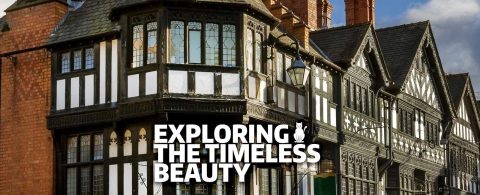
Exploring the Timeless Beauty of Wooden Windows

Exploring the Timeless Beauty of Wooden Windows

Exploring Timeless Beauty: A Journey through the History of Wooden Windows

Wooden windows have long been an integral part of architectural design, adding warmth, elegance, and charm to buildings across the centuries. From ancient civilizations to modern times, these windows have stood the test of time, leaving an indelible mark on our architectural heritage. In this blog, we embark on a fascinating journey through the history of wooden windows, tracing their evolution, significance, and enduring appeal.

Ancient Origins

The origins of wooden windows can be traced back to ancient civilizations such as Egypt, Greece, and Rome. In these early cultures, windows were often small openings covered with wooden shutters. These shutters served both functional and decorative purposes, allowing ventilation, natural light, and protection from the elements.

Medieval Advancements

During the medieval period, architectural advancements led to the development of larger and more intricate wooden windows. Gothic architecture, with its soaring cathedrals and intricate tracery, showcased stunning stained glass windows set within elaborately carved wooden frames. The craftsmanship and attention to detail displayed in these windows became a hallmark of the period.

Renaissance Elegance

The Renaissance era brought forth a renewed interest in classical architecture and a focus on symmetry and proportion. Wooden windows of this period reflected these ideals, featuring rectangular shapes, divided panes, and ornate carvings. Elaborate wooden casements and sash windows adorned grand palaces, churches, and townhouses, adding a touch of elegance to the architecture of the time.

Industrial Revolution and Beyond

With the advent of the Industrial Revolution, new materials such as iron and glass gained prominence in window manufacturing. However, wooden windows continued to be popular due to their natural beauty and versatility. The Victorian and Edwardian eras witnessed the rise of timber sash windows, often incorporating decorative glazing bars and intricate detailing.

Modern Revival

While the 20th century saw the emergence of various window materials, including metal and uPVC, wooden windows experienced a resurgence in popularity during the latter half of the century. Appreciation for traditional craftsmanship and sustainability led to a renewed interest in wooden windows. Today, wooden windows are not only cherished for their timeless aesthetic but also for their energy efficiency and eco-friendliness.

Wooden windows have traversed the annals of history, leaving an indelible mark on architectural styles and capturing the essence of different periods. From their humble beginnings as small shuttered openings to their grand manifestations in Gothic cathedrals and Renaissance palaces, wooden windows have endured as a symbol of beauty, craftsmanship, and connection to nature. In an era of evolving building materials, the timeless charm of wooden windows continues to enchant homeowners and architects alike, preserving the legacy of this enduring architectural element.

What Is All The Fuss About Flush Casement Windows

What Is All The Fuss About Flush Casement Windows

If you are looking to replace the windows in your home, you are likely to find yourself overwhelmed with the different types and styles of window that you could choose from – not to mention the wide variety of materials available, etc.

One of the most versatile styles of window – in any material – is the flush casement window. Whether you have a more traditional home and are looking for something in keeping with the style, these windows are often chosen for conservation area homes, or you have a modern, new-build then this is a great choice – just change up the finish.

What is a flush casement window?

Casement windows have long been the most prominent style of window in the UK, with the window opening outwards on a hinge either hung at the top or on one of the sides. Flush casement windows sit in the frame without any prominence – hence the term flush.

With advances in window technology, the flush casement window now provides as much weather protection as the lipped, or stormproof casement window.

How can I make this traditional-style work in my modern home?

Timber flush casement windows can work in any style of home, meaning you get the aesthetic look that works for you as well as the numerous benefits of hardwood or timber.

In a modern home, you might look to change up the colour of the paintwork on your new windows – a lighter grey colour would for example mimic the look of some uPVC windows whilst retaining the elegance and sophistication of timber.

My home is listed/conservation control – can I have flush casement windows?

Listed buildings or those under conservation control have stricter guidelines to satisfy, but you can still benefit from all the great features of a casement window. We can sympathetically design and build a slim profile version of the casement window specifically to meet these guidelines and would be happy to talk to you about these.

What security features can I have on my wooden windows?

There are a few different options for security on all of our windows, we have a high-performance flush window with high-security espagnolette multi-point locking mechanisms, or you could choose the more traditional cockspur handles and peg stays if you prefer. Our team of experienced consultants can help you to make a decision on the best choice for your home.

What are the benefits of wooden windows?

Wooden windows are both beautiful and practical for your home. Timber provides longevity – especially when installed through Catton Windows, we offer a 10-year guarantee on all of our joinery work. Our expert team has been creating and installing bespoke hardwood and timber windows and doors for over 35 years.


If you are looking to upgrade your windows, whatever style you are looking for then contact us to arrange a quote.

A Quick Accoya Troubleshooting Guide

Accoya Troubleshooting Guide

A Quick Accoya Troubleshooting Guide

If you have selected Accoya wood for any renovations or structures in your home, you are benefiting from a product masterfully designed and engineered for low maintenance and an extended service life of over 50 years.

However, all materials exposed to exterior conditions are subject to natural degradation. Accoya is no exception. If you have used Accoya for your doors, windows or conservatories, for instance, you should expect the product to change over time.

We’ve put together a quick troubleshooting guide for when this happens, covering common Accoya problems to do with degradation or wear.

Accoya Paint Problems

If the coating on your Accoya wood is uneven or blotchy, there are two main possible causes. Either the coating was poorly applied or the product’s chemical formulation is incompatible with Accoya.

Before applying coating to any wood, it is vital to sand down the surface to prevent the coating from catching on uneven timber fibres. The wood’s moisture content must also be below 6% and sufficient time should be left between layers.

Accoya’s compatibility with commonly used coating products is part of its appeal, but it’s still important to double check that the chemical formulation of your paint or stain of choice won’t leve undesirable results. We highly recommend asking the advice of your joiner or supplier before selecting a coating.

To fix either of these Accoya paint problems, you can either get the coating re-done professionally or attempt it yourself if you have the right equipment by sanding the wood back down to a plain finish and starting over.

Greying

Due to its high resistance quality, Accoya is sometimes left uncoated, which leaves it subject to a progressive greying of the colour. This is as a result of UV exposure, and is perfectly natural. The rate at which this weathering occurs will vary according to the amount of UV the wood is receiving based on its positioning, surroundings, elevation and surface structure. It’s important to note that if the surface of the wood is partially shaded, such as by a tree of neighbouring property, the greying will be uneven.

You should be advised of this common Accoya problem when selecting the wood for your property, and be offered the option of applying a protective coating. If this wasn’t the case and you’re not happy with the new grey colour, you will be able to sand back the timber to a clean surface and apply a new coating with a brush.

Surface Growths

Research has shown that when compared to unmodified pine, Accoya has a similar or lesser rate of mould and yeast growth. However, as with all softwoods, there is still a high risk that surface growths will appear in damp areas. Such environmental factors, as well as temperature and sunlight, will inevitably impact levels of mould or yeast development.

Using a coating that is specifically formulated to resist to the growth of both blue stain and black spot mould growth is a key preventative measure, as is regular cleaning. It may be somewhat of a cliché, but prevention is always better than cure. Regularly wiping down the joinery to reduce the level of dirt contamination will significantly reduce the risk of unsightly mould growth.

Bring your Home to Life with Bespoke Joinery…

Bespoke Joinery

Bring your Home to Life with Bespoke Joinery…

In a world full of mass-produced products, quality can be compromised – here at Catton Windows, we pride ourselves in the time honoured joinery techniques we use, and the beautiful results they produce. We use the Mortise & Tenon method of joinery, which has been used by woodworkers for centuries…

The Mortise & Tenon is a joint that dates back over 7,000 years – in fact, the thirty stones at Stonehenge were fashioned with Mortise & Tenon joints before they were installed between 2600 and 2400 BC!


– Mortise joint on the right and Tenon joint on the left

All of our products are designed and handcrafted in house, at our workshop in Norwich, and we are proud to be one of the few companies that still do this – which means our bespoke products are increasingly rare.

Bespoke joinery gives you the ability to choose the exact shape, size, colours and materials for your hardwood product – customers can be involved in the design process, giving them control and a sense of accomplishment when the finished product is presented. As well as creating unique hardwood products from scratch, we can also replicate to match existing windows and doors, which is perfect if you are restoring a building or replacing a broken window or door. All of the materials we use at Catton Windows are sustainably sourced and environmentally friendly, complying with our strong ethics.

As well as windows and doors, we can utilise our custom joinery techniques to create: box gutters, unusual shaped and solid roofs, lantern tops, swimming pool enclosures, sheds, hothouses, garden offices and much more – in fact, we can take on pretty much any project involving timber!

“I would like to say how impressed we were with the quality of the hardwood windows that have just been fitted in our house. Everyone who has seen them is knocked out at how good they look. I was personally taken with the qulity of the paint/stain finishes – they almost look ‘too good’ for our house. This is the 3rd job Catton has done for us – two previous conservatories – all of which came up to the same standard.” – Mr & Mrs R, Wood Dalling.

As you can see from the above testimonial, our products speak for themselves. Our quality timber, combined with our passion and skilled craftsmanship, creates a stunning finished product, bespoke to our individual clients’ needs. We pride ourselves in delivering exceptional customer service, and there is nothing more rewarding than providing our clients with beautiful, custom joined hardwood products.

To find out more, please feel free to give us a call on 01603 788437 or email us. You can also browse our range of products, and check out our window designer page to view some of the different options and finishes we have on offer.

7 Different uses for a Conservatory

7 Different uses for a Conservatory 3

7 Different uses for a Conservatory

Conservatories are not just a great place to relax with a cup of tea and a good book; there are plenty of other uses that you may not have even thought of… 

Growing plants
From small indoor plants, to trees, a conservatory is a perfect environment to grow plants. The glazed windows and suntrap properties helps to concentrate the sun’s rays and aids plant growth.

Dining room
Whether it’s a place to relax each evening for family meals, or for hosting dinner parties with family and friends, conservatories are great for using as dining rooms – especially if you have a beautiful garden to show off!

Catching some sun
If you are in need of some additional vitamin D, and want to catch some rays, relaxing in the conservatory on a nice comfortable chair is a great way to do this in summer. Enjoy the weather without the risk of getting caught in a sudden downpour!

Office space
This even beats having an office outside in the summer – without the added annoyance of your paperwork flying away! Conservatories are great for use as office spaces, providing you with a peaceful, pleasant space to clear your mind and focus on your work without being disturbed.

Games room
Conservatories can be a fun area to enjoy recreational activities for both adults and children. Perfect for playing a game of pool, challenging your friends to a tournament on a games console, or relaxing whilst your children delve into their toy boxes, turning the room into a play room.

Hobbies and crafts
Another great use for conservatories is to use them as a space to let out your creativity. If you are looking out onto a beautiful view, why not set up your easel and paint it?

Utility area
Not quite as exciting as the above uses, but by far the most practical – conservatories can be used as a utility area, to store your cleaning products, brooms, mops, pet bedding, and general maintenance equipment. Not forgetting, a space to take off those muddy boots after a long winter walk – saving your carpets!

Catton Windows has over 30 years’ experience in creating beautiful, bespoke hardwood conservatories. Each of the conservatories designed are different – they can range from older styles such as Victorian, to new, modern designs – complete with a wide range of finishes and glazing options. Our expert craftsmen can create something truly exceptional that fits in with your home, seamlessly. To find out more about conservatories, and how you can go about adding one to your property, please feel free to contact us and discuss it with our friendly experts.

3 Tips for Adding Value to Your Home

3 Tips for Adding Value to Your Home

3 Tips for Adding Value to Your Home

Whether you are looking to sell your house, or would just like to do some home improvements for yourself and your family – we have come up with 3 top tips for adding value to your property…

FIRST IMPRESSIONS…

Wow people from the moment they walk through the door – literally. Make sure you have high quality and structurally sound doors, with neat and well maintained paintwork. If your doors are looking shabby, then it could hint that the property is not secure, and is not well looked after. There are so many different options when it comes to choosing the perfect doors for your home – including hardwood and bi-fold designs, and even garage doors.

THROUGH THE WINDOWS…

Whether you are looking in from the outside, or gazing from the inside, your windows are incredibly important, as they give a hint of what is inside. If you are looking through rose-tinted glasses, then everything seems that much more appealing – if you are looking through a dirty, crumbling window frame, then it’s hard to see any further, and could influence your judgement of the property as a whole. Also think about the finishing touches on your windows such as the handles – feel free to check out our window designer page and create your own windows!

EXTEND…

If you have room for expansion, a conservatoryorangery or garden room is the perfect way to add value to your home. Selecting the correct type of conservatory to suit your home is important – if you have a lot of wooden windows and doors and frames on your house, then it would be good to opt for a quality hardwood based conservatory, in a matching or complementary colour. You can also choose which shape/style to have your conservatory, so that it also suits your home. Some of the main layouts include: Victorian, Edwardian, Gable Front, Lean Too, P-Shape and T-Shape.

Catton Windows are able to make any type of conservatory, orangery, garden room, or hardwood windows and doors, bespoke to your individual requirements – adding the upmost value to your property. With a vast variety of paint and finishing options, the choices are all down to you – we listen to our customers’ needs and turn their creativity and vision into a quality finished product that lasts.

To find out more about our bespoke hardwood products including doors, windows and conservatories, please contact one of our friendly experts to discover how we can help you add value to your property and much more.

5 Fun Facts about Windows…

5 Fun Facts about Windows

5 Fun Facts about Windows…

Even though we use windows every day, people don’t give them much thought unless they are needing to buy new ones. Here at Catton Windows, we think about windows all the time – we love windows! So here is some fun window trivia to get you thinking…

Did you know? 

1. Glass was first used in windows of homes in England in the 17th Century – as early as the 14th century, windows were made out of panes of flattened animal horn!

2. In 2010 the  in Britain was discovered near Newbury, which was built 1000 years ago in a wall of a Saxon church.

3. Keeping your windows clean and clear in your home is considered as good Feng Shui, as the windows are known as the “eyes of the home”.

4. The world’s largest windows are on a recently renovated house in Antwerp – they weigh nearly 4 tons and are 20 feet tall!

5. Timber provides excellent insulation when used for windows, as it is a low thermal conductor.

At Catton Windows, we create the highest quality hardwood windows, bespoke to our clients’ needs. We can create something beautiful for the “eyes of your home”, no matter what style house you own, with a wide variety of finishesbeading and casement styles. If you are looking to revamp your windows, please feel free to contact us today and discuss your project with us!

What Are Bi-Folding Doors, And Why Could They Benefit Your Property?

What Are Bi-Folding Doors and Why Could They Benefit Your Property

WHAT ARE BI-FOLDING DOORS?

Bi-folding doors can be opened up fully, creating an open plan effect throughout your home – you can use them for doors that open up to your garden, or for connecting rooms internally. The unique folding mechanism used in bi-fold doors means that they can be neatly folded to the side, creating a beautiful, open passageway to your rooms. To see examples of how they work, please check our bi-fold doors page!

Here at Catton Windows, we use quality hardwood for our bi-fold doors, which can be stained in any colour you desire – which means you can have a design that’s ideally suited to your individual property.


WHY CHOOSE BI-FOLDING DOORS?

Space – Bi-fold doors are flexible, strong and secure, and when used internally, they can make your rooms look much bigger – opening up space that you didn’t realise was there.

Design – We can create these doors bespoke to your unique needs, matching them to the other design elements and style of your property. Everyone wants to be able to relax in a designer-home!

Bring the outdoors in – Many people choose to install bi-fold doors in their living rooms or kitchens, which open up onto their gardens. You could also have bi-fold doors in your conservatory, orangery or garden room, to connect your garden with your home even further – these rooms can be great for parties that spread outside, or for enjoying those wintery views from the cosy comfort of your home.

If you would like to find out more about bi-fold doors, conservatories, or any other product that could improve the quality of your home, please contact us and speak to one of our experts or visit our contact page.